


|
Additional Information
What are ScratchSleeves made of?
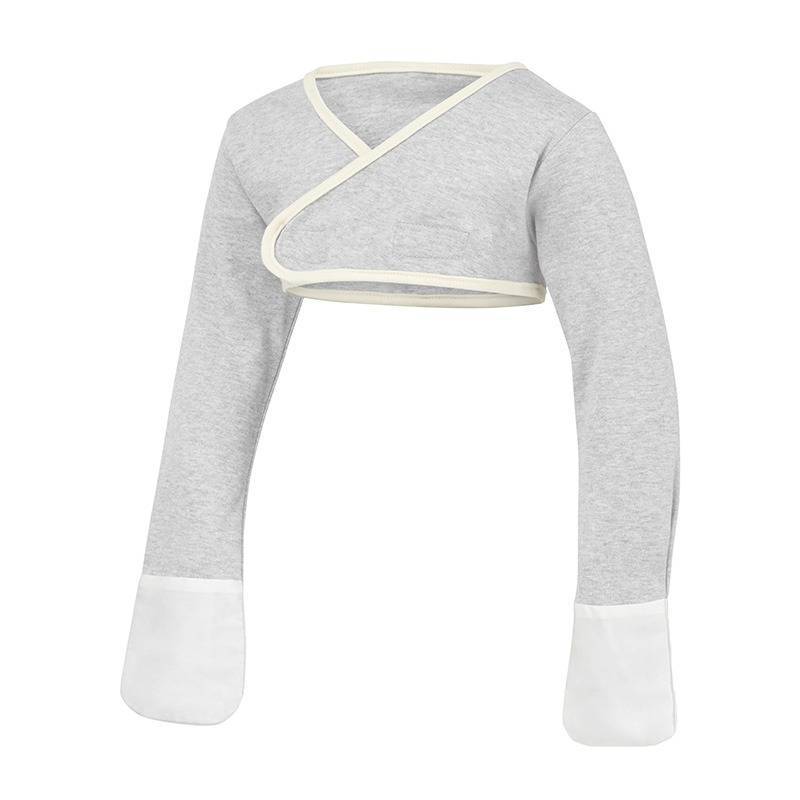
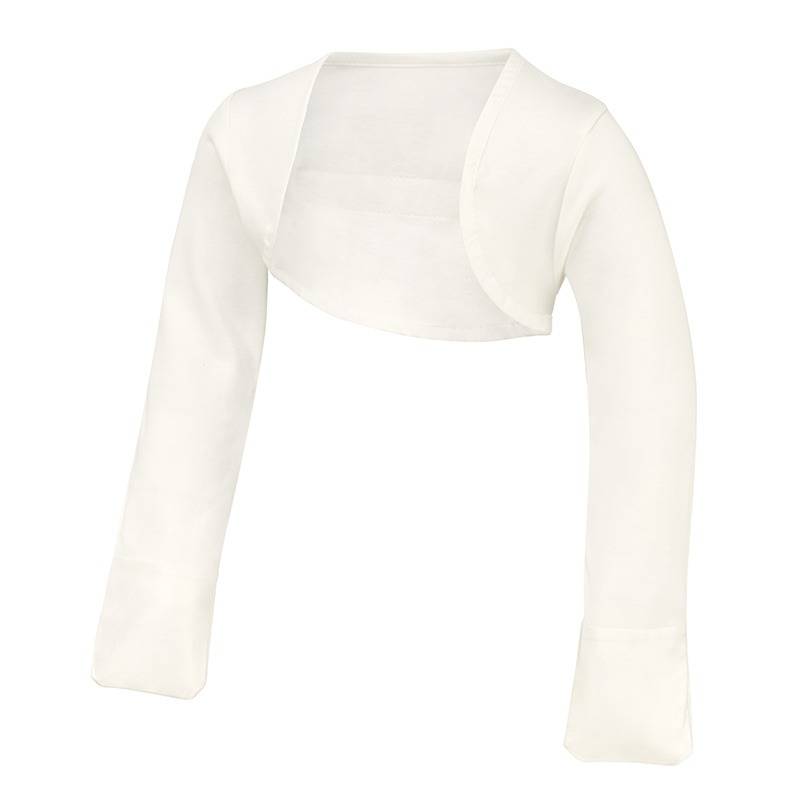
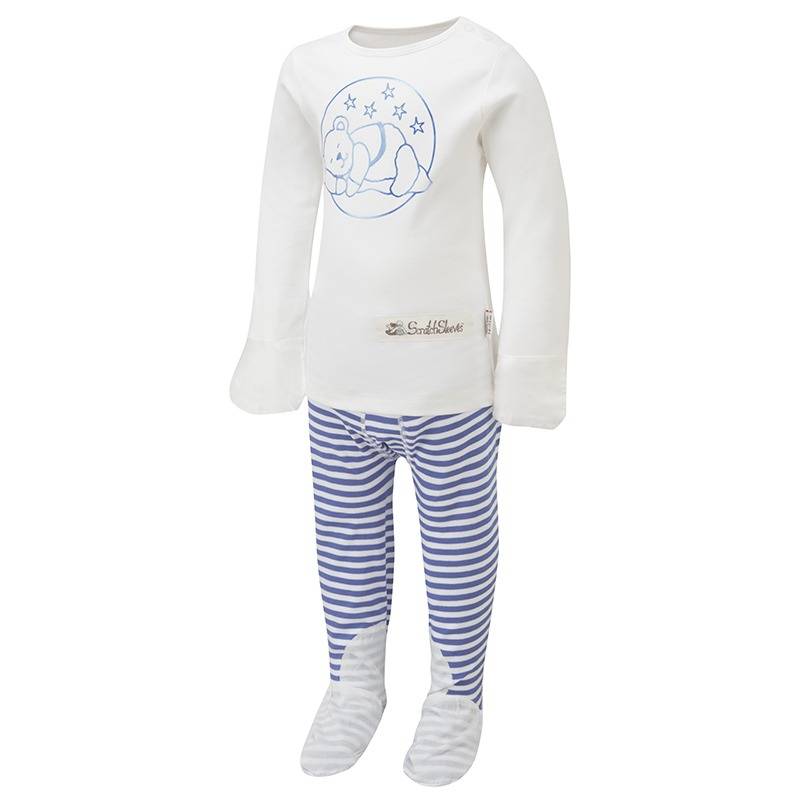
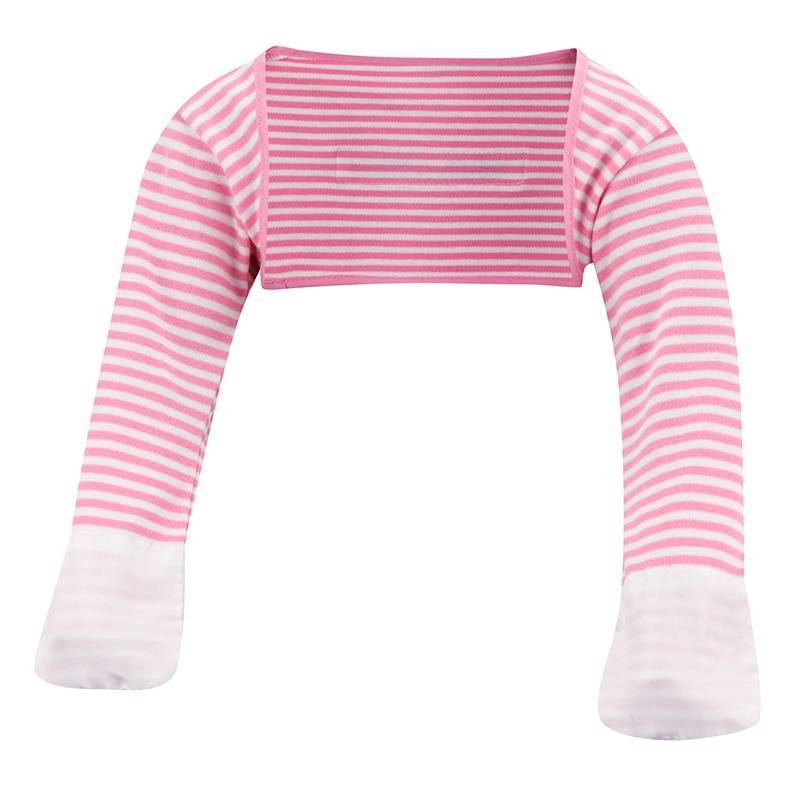
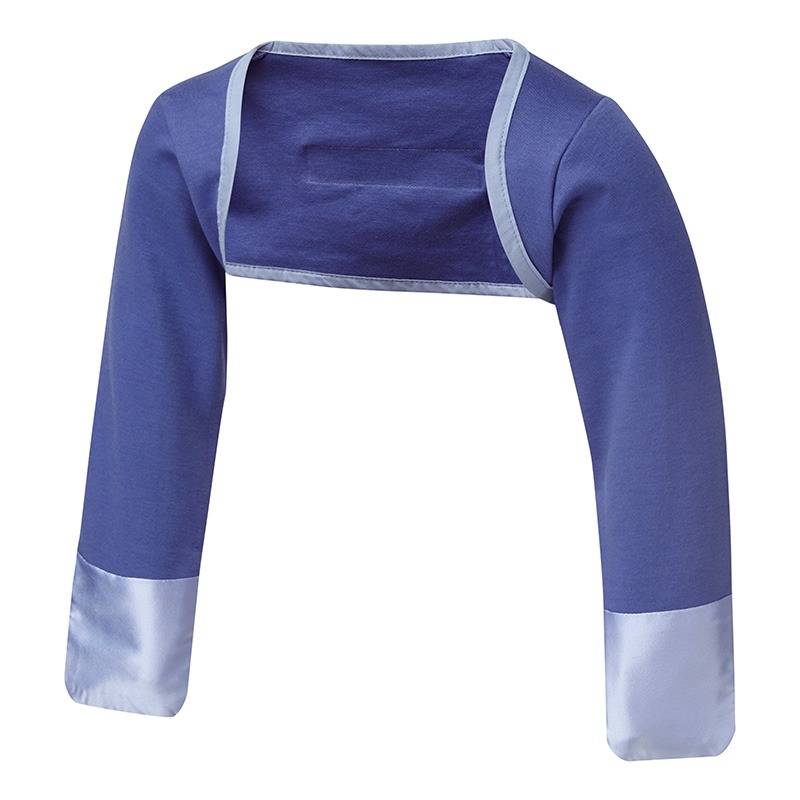
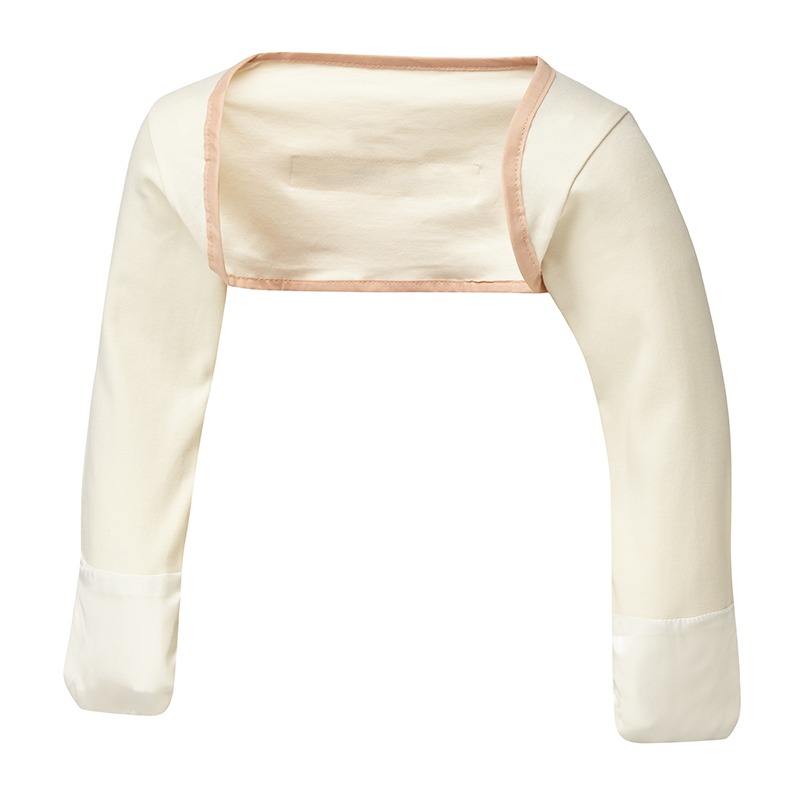
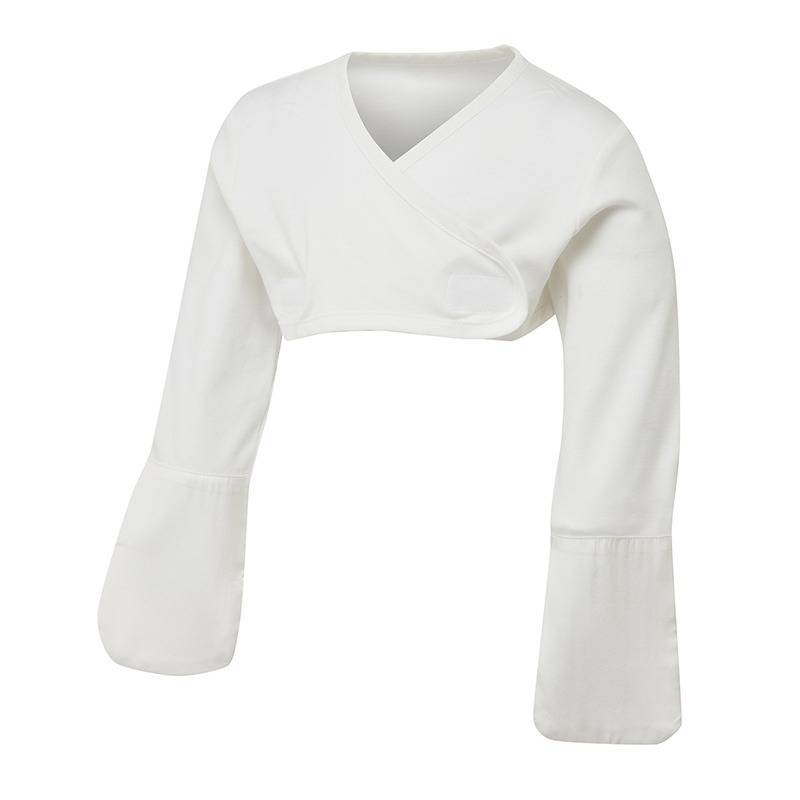
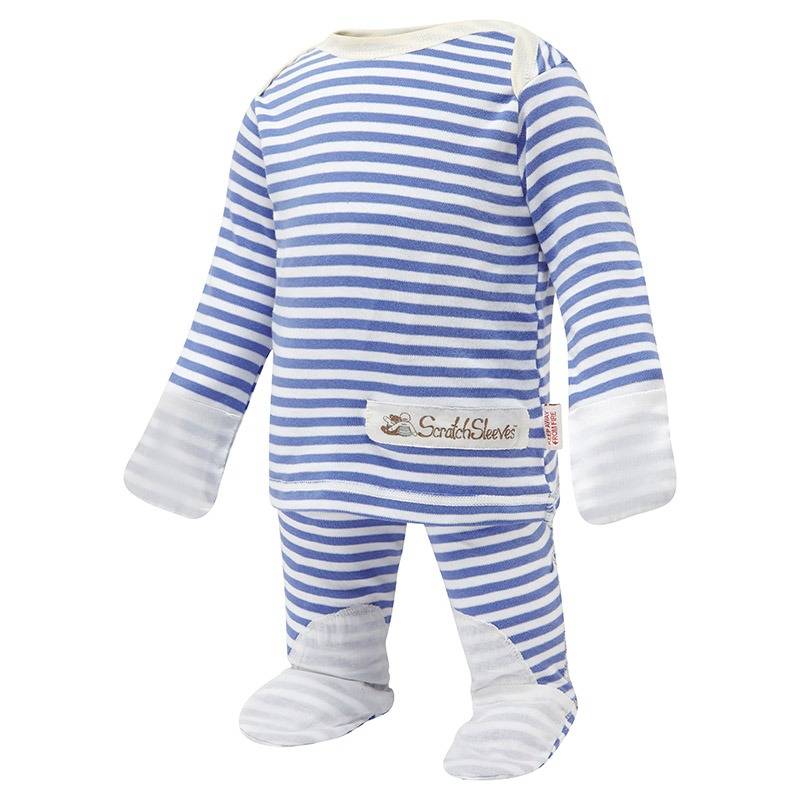
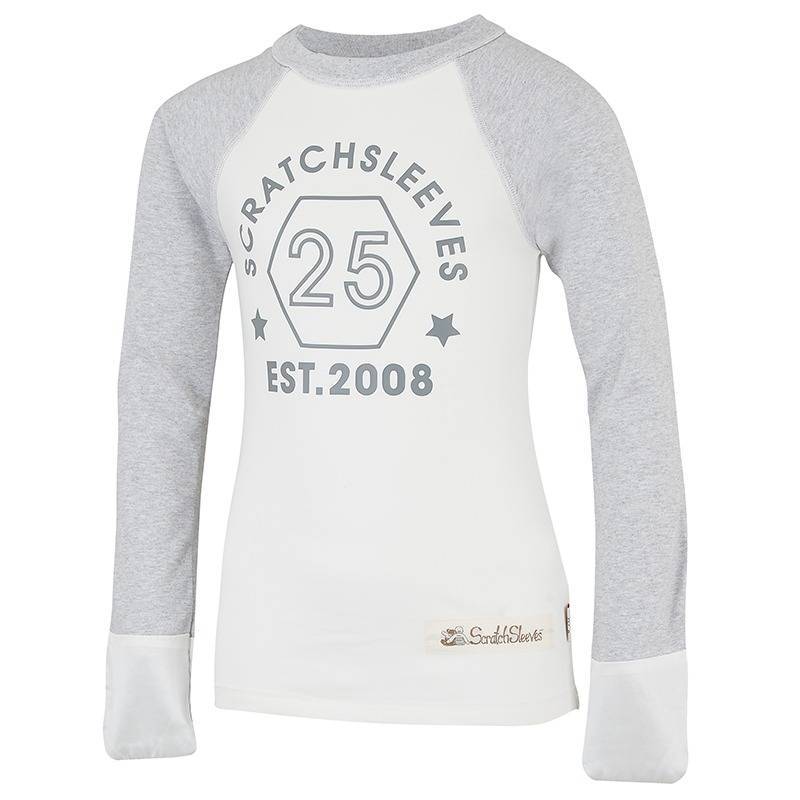
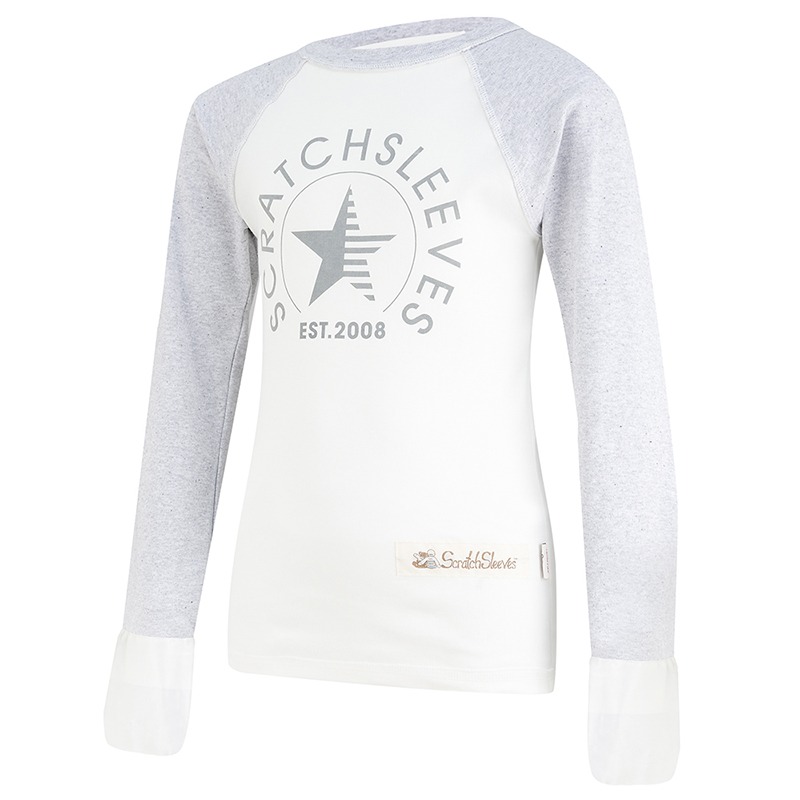
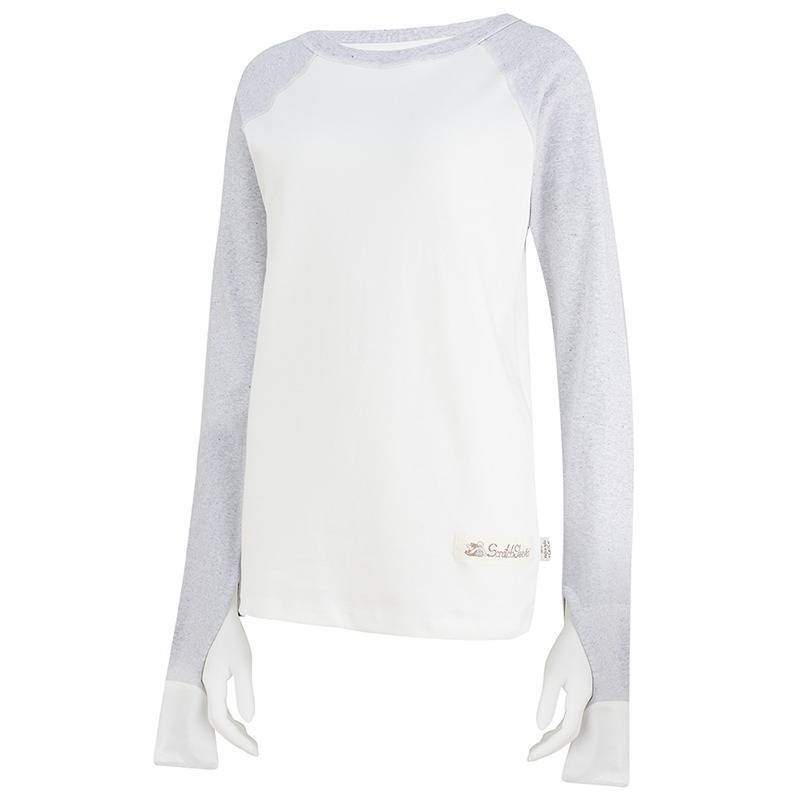
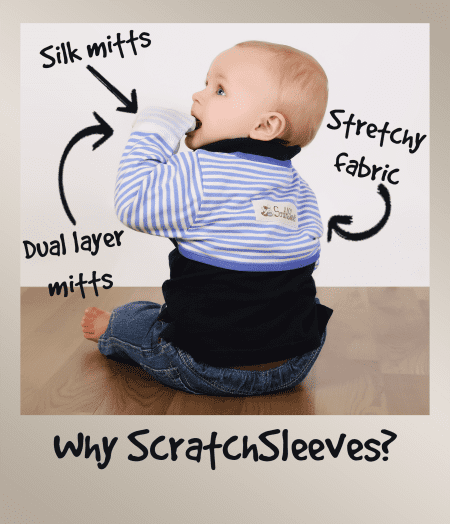
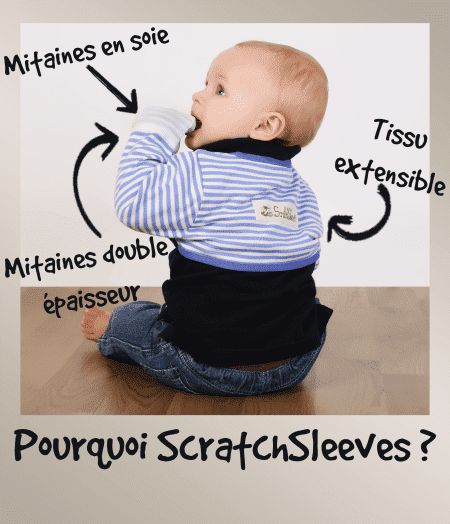
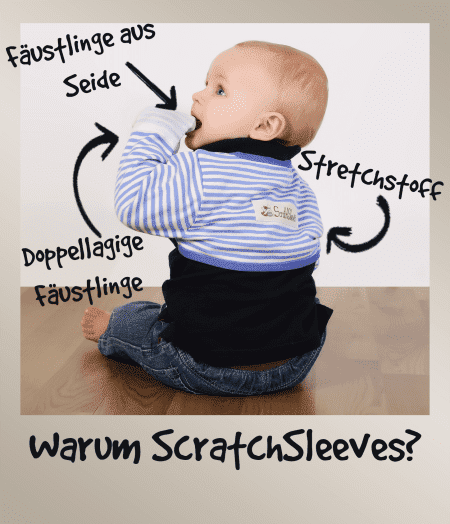
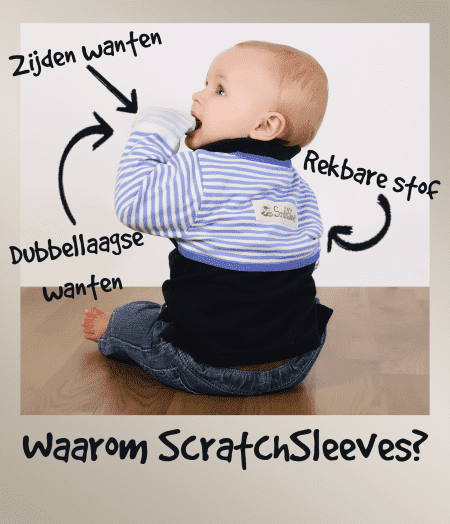
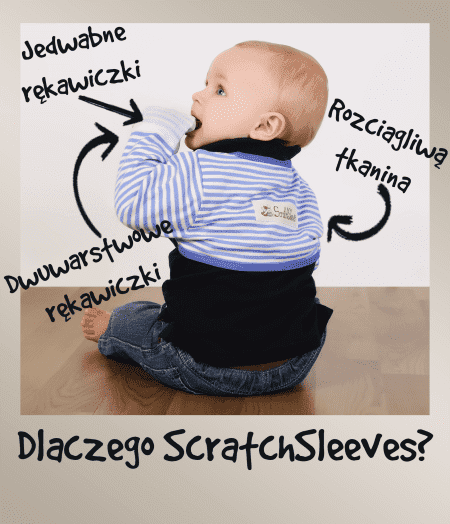
The main body of ScratchSleeves is made from 100% cotton interlock that is stretchy, light and comfortable
The binding round the edge of the ScratchSleeves is 100% cotton and keeps the shape of the garment to ensure that they stay in place.
The outter mitts are 100% natural silk that is gentle and cooling on itchy skin.
Top
Washing instructions for ScratchSleeves
Machine wash ScratchSleeves at 40°
It is best to use a non biological washing powder. Biological washing powders will shorten the life of your ScratchSleeves as they dissolve the natural fibres of the silk mittens.
ScratchSleeves can be tumble dried and ironed on a hot setting.
Top
Tips for using ScratchSleeves
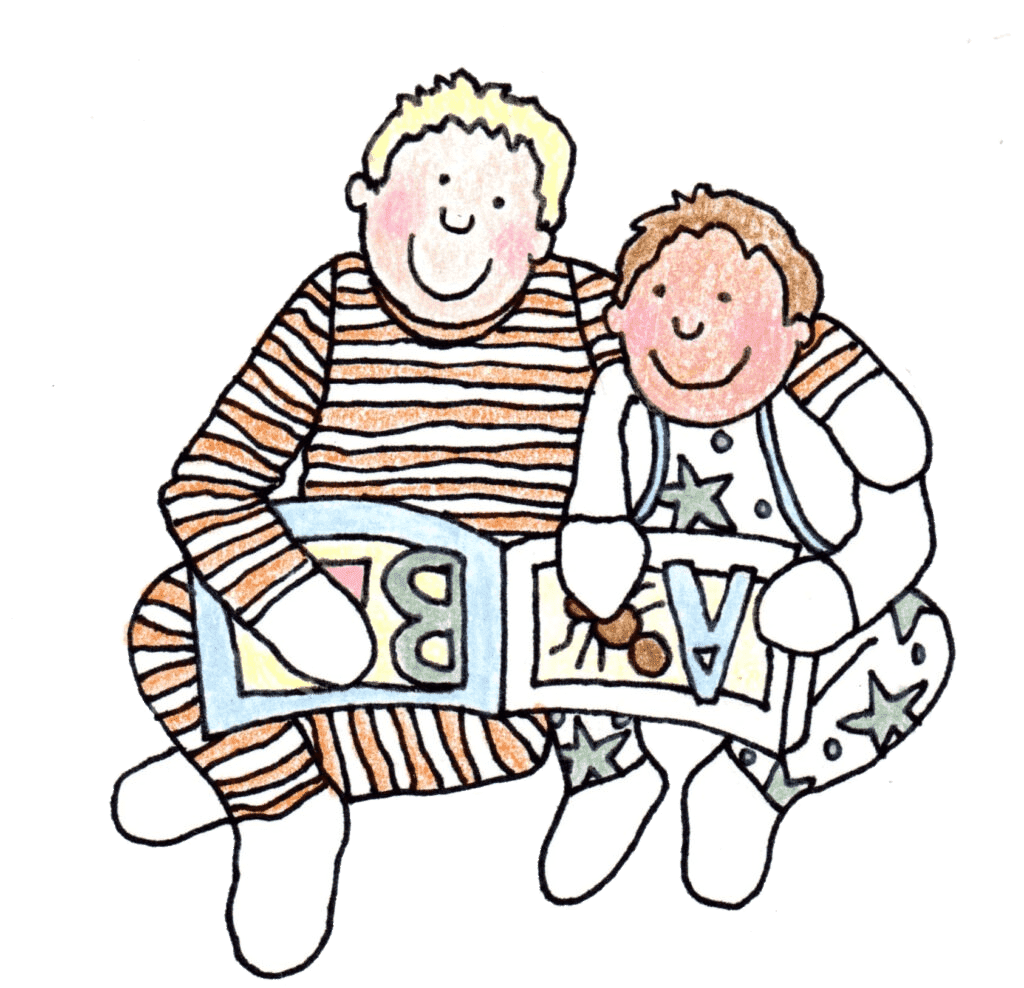
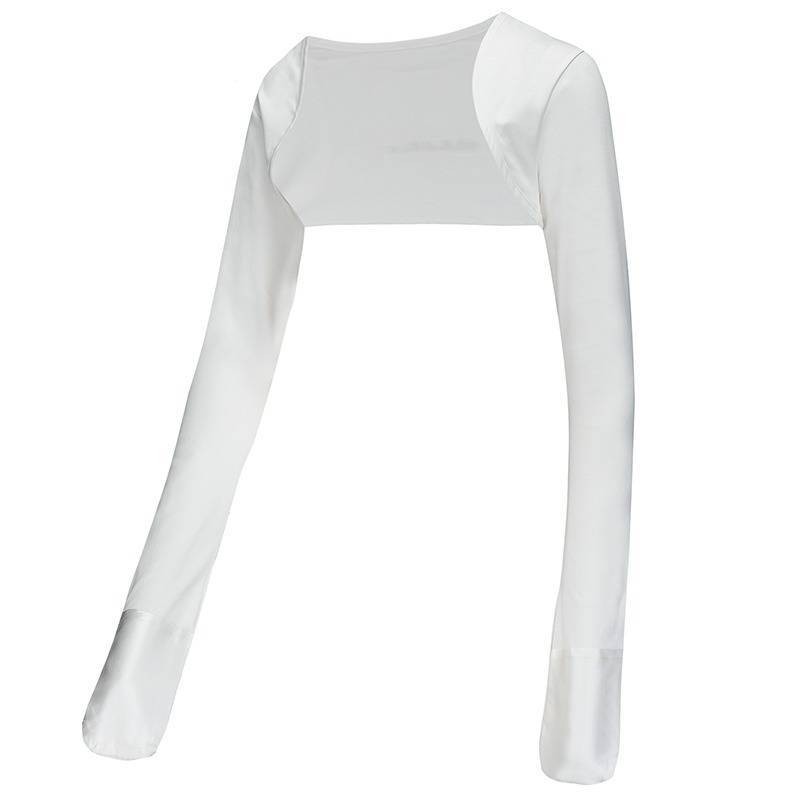
ScratchSleeves are worn like a cardigan.
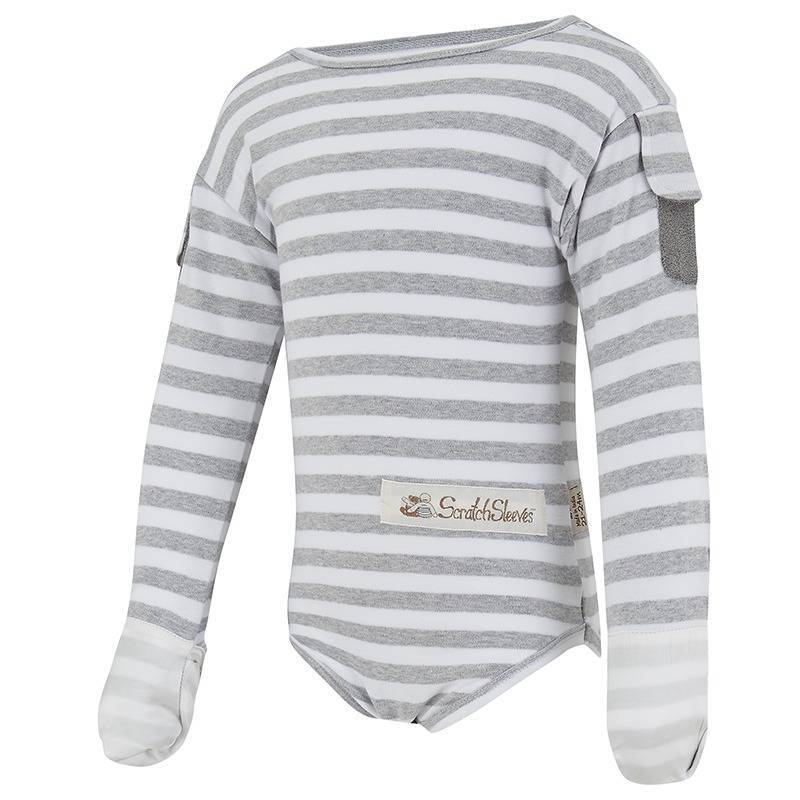
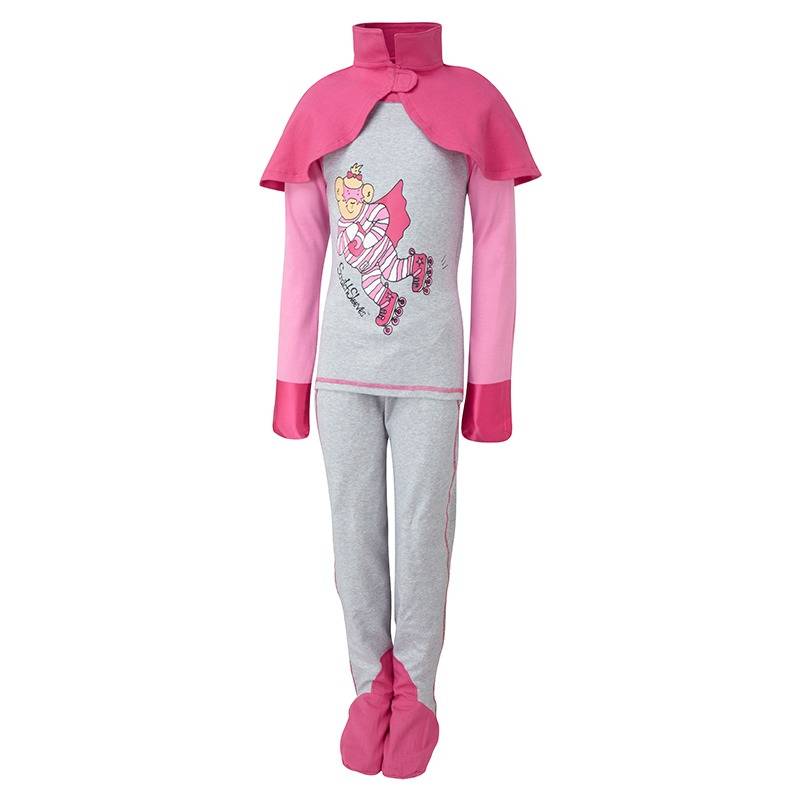
For most children the ScratchSleeves are worn over the top of their normal clothing but for older and extremely wriggly children ScratchSleeves can be worn under the clothing making them tougher for the child to remove.
Remember that ScratchSleeves are an additional layer of clothing. Take care that your baby does not become too hot.
Top
Shipping details
Shipping |
UK | - added automatically | £2.00 |
|
|
£4.00 |
We are now happy to ship anywhere in the world including the USA and Canada.
|
We normally dispatch orders within two working days but on the rare occasssions when we are very busy it may take us up to five working days. We use first class Royal Mail for all UK orders and Airmail for overseas orders.
Top
Contacting us
We would love to hear from you so please contact us by:
sending us an email at info@scratchsleeves.co.uk.
ring us on 01962 890210 within the UK or +44 1962 890210 from overseas.
writing to: Trolls & Tribulations Ltd Threeways Sleepers Hill Winchester Hampshire SO22 4ND
Top
Disclaimer
We have collected this information together to try and help other parents
with children suffering from eczema, but we are not doctors so if you
are uncertain you should consult with your doctor before
acting on any information contained on the ScratchSleeves website. All
content of the ScratchSleeves website is provided for general
information only, and should not be treated as a substitute for the medical advice of your own
doctor or any other health care professional.
Top
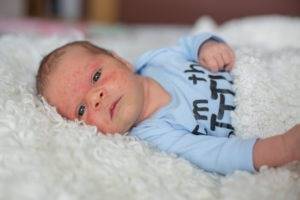
What does eczema look like?
Dr Sears gives the most practical guide to identifying eczema that we've come across:
Dry skin – your child will have slightly dry skin with a rough texture. You may be able to see and feel tiny white bumps as you run your fingers across the skin.
Dry patches – you may see scattered, scaly, dry, white patches anywhere on the body.
Flare-ups – from time
to time you will see some areas of the skin become more irritated and
flare up. These will look like raised, red, slightly oozing patches.
Flare-ups generally occur near skin creases – most commonly
the inside of the elbows and behind the knees, but also in the neck,
wrists and hands, and feet. It can also occur on the trunk. One unique
aspect of eczema is that it usually does not affect the diaper area.
A google
search will pull out illustrative pictures that show the
variety of manifestations of eczema in children and infants. These
are just and example.
Top
Who gets infantile eczema?
Around 10% of infants and children. Atopic eczema is
hereditary so tends to run in families though it can skip generations.
Unfortunately there is nothing that can be done about the genes that
the infant or child has inherited, but there is quite a bit that can be
done to avoid aggravating the eczema and generally make the child more
comfortable. The other good bit of news is that infants and
children can grow out of the eczema.
Top
What can cause eczema flare ups?
This list seems to get ever longer every time we look into what can aggravate eczema, fortunately not everything on this list aggravates the eczema in all infants and children. So it is a case of trying to workout which ones are affecting your baby or child and then trying to avoid them.
Dry skin. It is best to avoid anything that drys out the baby or child's skin.
Getting overly hot can cause the skin to sweat which in turn may aggravates the eczema. This is often cited as a good reason to avoid synthetic fabrics and stick to natural cotton.
Wool or any other scratchy clothing.
Overly tight clothing which restricts air movement round the skin causing it to get hot and sweaty.
Detergents and soaps. Perfumed detergents and soap are notoriously worse than fragrance free versions, we have also found that the non-bio washing powders are kinder to the skin than the bio versions.
Food allergies and intolerances can exacerbate the problem especially for babies under 1 year. The most likely candidates are cow's milk, eggs and peanuts.
histamine-containing foods, such as tomato, berries, strong cheese, chocolate, Marmite and dark-meat fish.
Exposure to furry animals and pets.
Certain bacteria (although we haven't managed to find out which ones yet).
Sodium Lauryl Sulfate (SLS) and its close relative Sodium Laureth Sulfate (SLES) which are foaming agents used in soaps.
Stress. Which is all very well to know but it is rather difficult to see what extra a parent can do for a 6 month old to reduce their stress levels.
Top
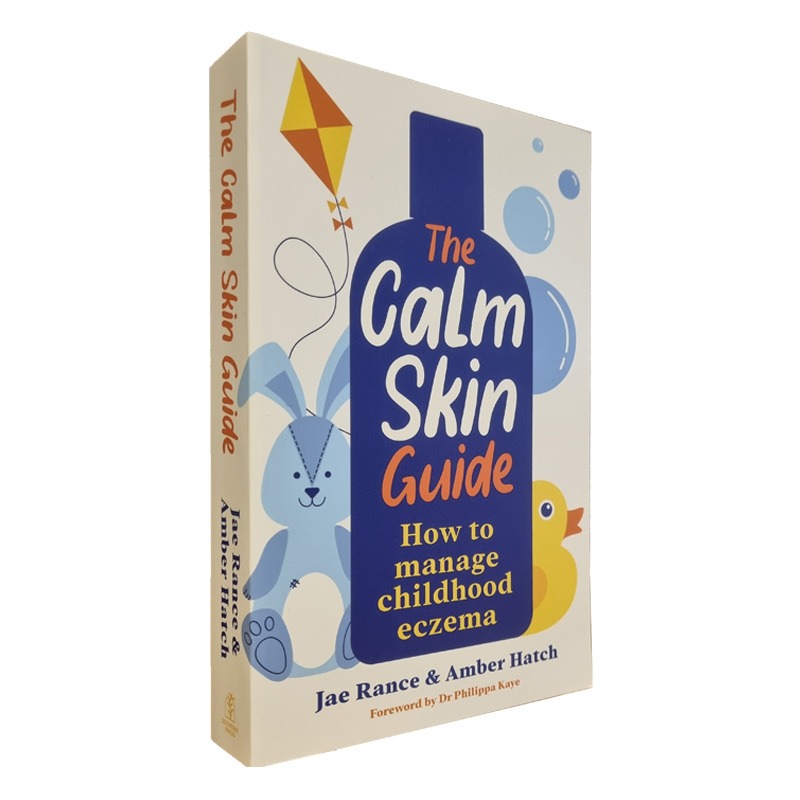
Links we find useful
These are the resources that we have found useful:
Top
|
|